Skip to content

Explainer 04 · 8 scenes · about 6 min

Approve with a tap, prove it forever

The owner approves in the app (approving in Telegram is coming). Every step leaves a signed receipt that holds the fingerprint of the one before. Change one old receipt and the chain breaks where you touched it.

Hands on: Approve a draft, then tamper with a receipt and run the verifier yourself. The fingerprints and signatures are real, made in your browser.

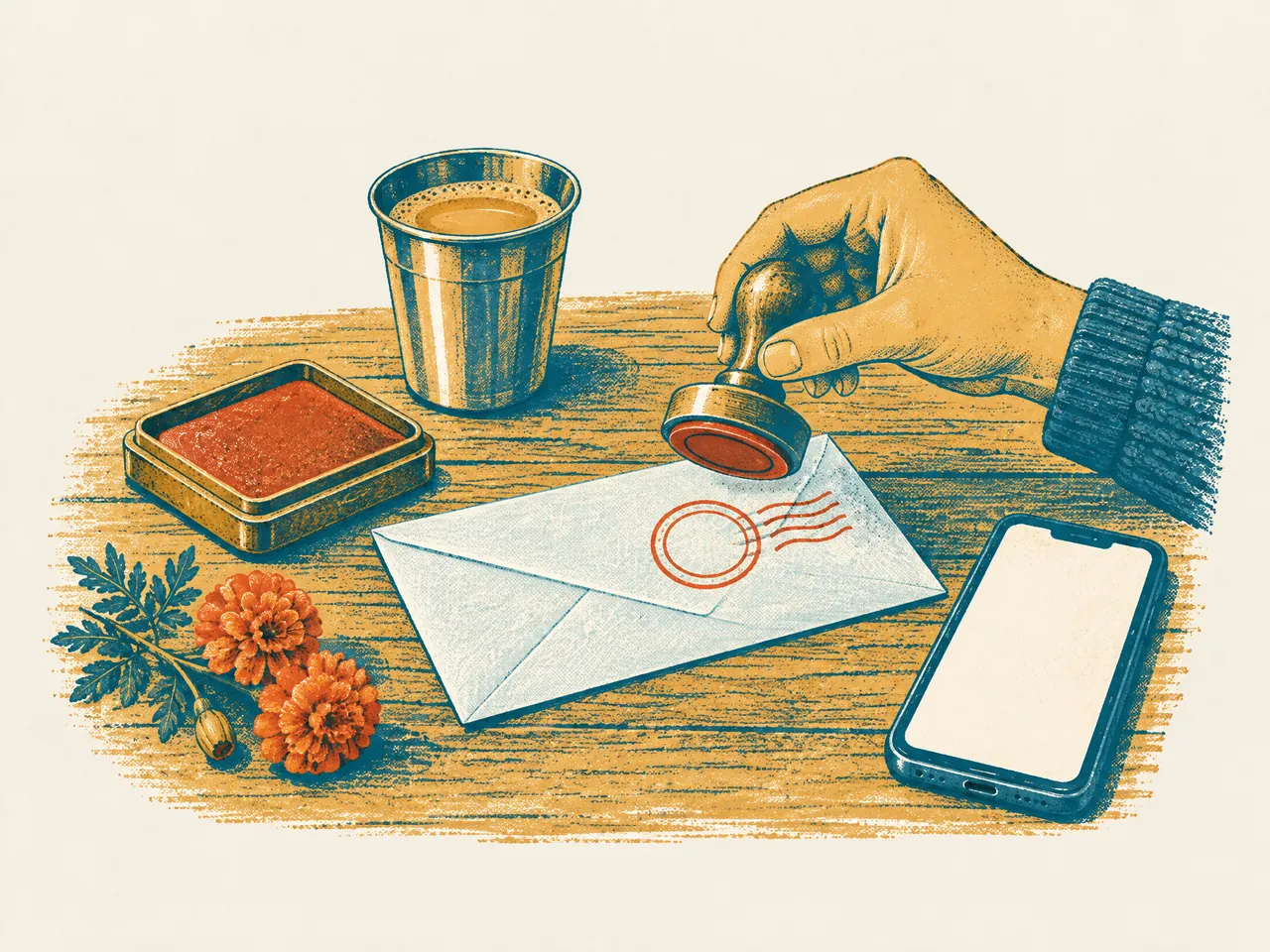
Illustration: a hand lifts a rubber stamp from a letter, leaving a round red postmark, next to a phone and a tumbler of chai.
Fictional example
Example, written by handThe checks are Shiva’s own code.
Reply · English

To Rohit, on Google

Do come back soon.

— Meera and family

Underlined lines have a source. Tap one to see it.

Ready for you Every required check passed. A person still decides.

  1. 01 / 08

    The draft waits for a person

    Rohit’s reply has passed its checks and waits in Meera’s inbox. A violet dashed edge means an agent wrote it and no person has decided yet.

    Meera has three choices: Approve, Edit and approve, or Reject with a reason (wrong fact, wrong tone, wrong language, too long, don’t reply). The model never approves anything.

  2. 02 / 08

    Approve in the app

    One tap. A round postmark lands on the letter with the date, in sindoor red, like the stamp on an inland letter.

    Then the handover: copy the reply, open Google, paste it, and tap “I’ve posted it”. Shiva will post for the owner directly once Google grants it API access; until then, copy and paste keeps the owner in charge.

  3. 03 / 08

    Or approve in Telegram (coming)

    Telegram approvals are coming; today you approve in the app. For owners who live in chat apps, the plan is to approve in Telegram, which is free. The draft arrives as a message with buttons: Approve, and one button for each reason to reject.

    The chat is linked once, with a one-time code from the app. Approve appears only when the checks would allow it, and the buttons go through exactly the same decision as the app.

  4. 04 / 08

    Every step leaves a receipt

    Each action writes a receipt: the review added, the draft recorded with its check results, the draft put in the inbox, the approval, the “posted”. Each says who did it (a person or an agent), what, and when.

    A receipt holds fingerprints of the texts, not the texts, so it proves what was checked without copying a guest’s words around.

  5. 05 / 08

    Each receipt holds the one before

    Every receipt is written down in one fixed way and given a fingerprint. Each one also carries the previous receipt’s fingerprint, so they form a chain. Then the business’s key signs the fingerprint.

    For the curious

    Each receipt is one line of JSON with its keys in a fixed order, fingerprinted with SHA-256 and signed with an ed25519 key.

    The stage made a fresh key in your browser just now and signed these five receipts with it.

  6. 06 / 08

    Tamper with one

    Say someone edits receipt #4 afterwards, to make it look as if the agent approved on its own. Run the verifier: it recomputes each fingerprint, checks each link and each signature, from #1 to the end.

    The chain breaks exactly where you touched it, and the gold seal is gone. In Shiva, gold means one thing only: the signatures verify right now.

  7. 07 / 08

    Rebuild it, delete it: it still shows

    A careful forger might rebuild every fingerprint after the edit. That fixes the links, but not the signature: only the business’s key can sign a new fingerprint. Deleting the newest receipt is caught too, because the chain must end where the business’s own record says. Deleting the first is caught because the chain must start at #1.

  8. 08 / 08

    What it proves, and what it can’t

    The chain proves who approved what, and when, and that nothing was changed, removed or slipped in afterwards. Owners can download their receipts with the public keys and the steps to verify them without Shiva.

    It can’t prove a reply was true or kind. That is what the checks, and the owner’s own reading, are for. For more on hash chains, see the VritantaNextGen explainer on receipts you can’t fake.

In plain words

The short version

  1. Nothing is posted until a person approves it, in the app (Telegram approvals are coming). The AI never approves.

  2. Every step writes a receipt: who (a person or an agent), what, when, and the fingerprints of what was checked.

  3. Each receipt holds the fingerprint of the one before and is signed with the business’s key, so the receipts form a chain.

  4. Change, rebuild or delete any receipt and the verifier shows where. Gold means the signatures verify right now, and nothing else.

  5. The chain proves who decided and that the record wasn’t changed. Whether a reply was right is the job of the checks and the owner.

For the curious: sources and technical terms

Sources

Where this comes from

  1. Trust or Escalate: LLM Judges with Provable Guarantees for Human Agreement

    Jung, Brahman, Choi · 2024 · escalating to a person as the safety guarantee

  2. Beyond the Chat: Executable and Verifiable Text-Editing with LLMs (InkSync)

    Laban, Vig, Hearst, et al. · 2023 · warn, verify, audit

  3. Receipts you can’t fake: how a hash chain works

    VritantaNextGen explainers · 2026 · the same receipt design, explained from scratch

Fictional example

Meera, Rohit, the times and the receipts are fictional. The fingerprints are real SHA-256 and the seals are real signatures, made in your browser by a copy of Shiva’s receipt code that its tests hold to the server’s; the key is made fresh on this page and is not Shiva’s. The Telegram chat is an illustration. Nothing is sent anywhere.

Next · Explainer 05The weekly Google postChange the type of business, add a discount line, and watch the hotel-post rule decide.

Shiva is in development. It has no customers yet, so these pages show how it works, not results. The demo shows the real screens, with a made-up business.